Breaking Barriers with Diana Yousef: From Molecules to Impact - The Story of change:WATER Labs
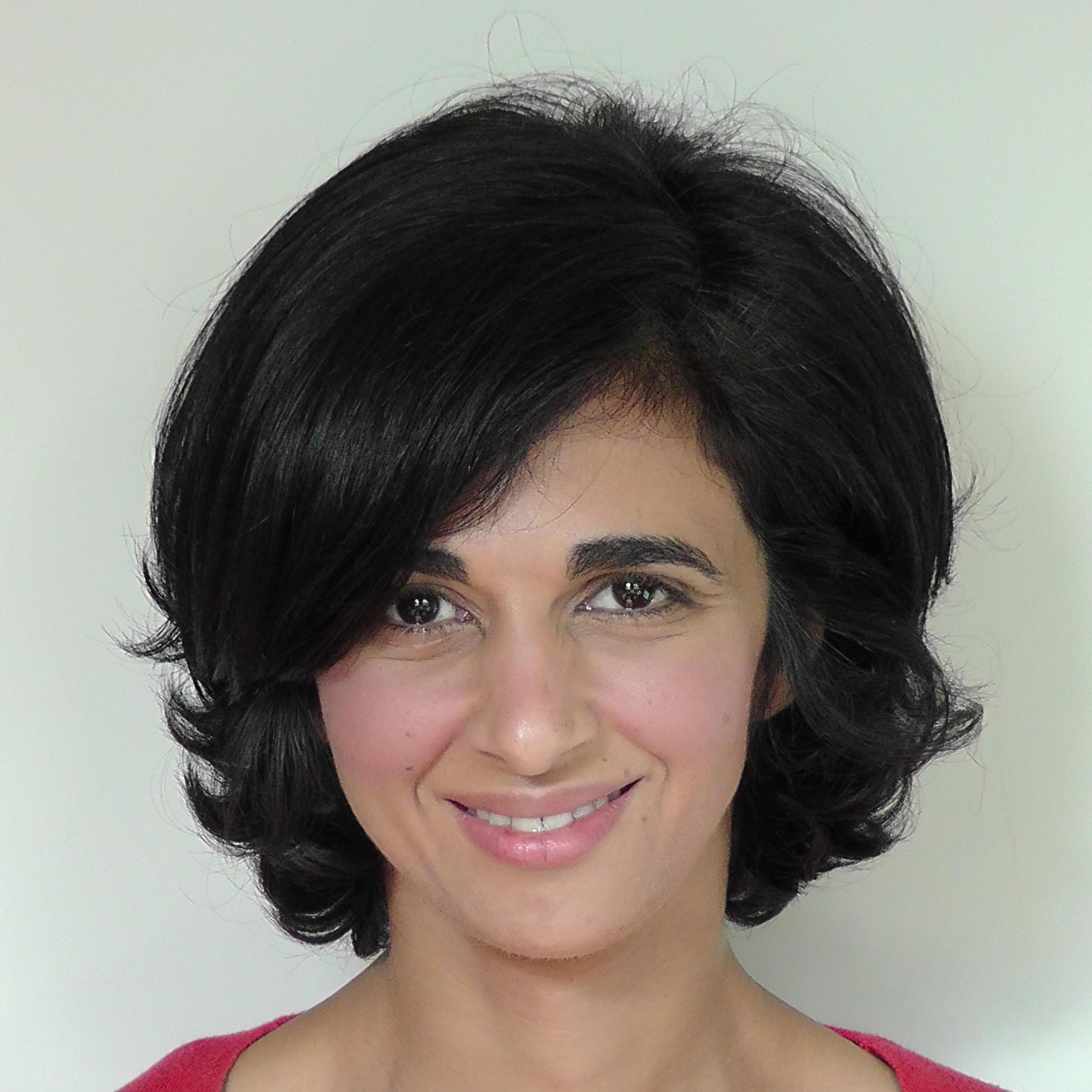
Diana is the Founder and CEO of change:WATER Labs, a climate tech venture using innovative materials science to increase access to safe, sustainable, and scalable sanitation in places with insufficient water and/or sewerage infrastructure.


About The Episode
In this episode with Diana Yousef, a serial entrepreneur with over 15 years of experience commercializing science-based technologies for global social and environmental impact, The Founder Spirit explores her journey from a childhood fascination with nature and science to founding change:WATER Labs, a climate tech venture using innovative materials science to increase access to safe, sustainable, and scalable sanitation in places with insufficient water and/or sewerage infrastructure.
Discover how Diana's unique experiences of growing up as an Egyptian-American and relentless pursuit of impact have led her to create solutions that address global challenges, empower women, and promote sustainable development. Join us for an insightful conversation about innovation, resilience, and the power of science to change the world. TUNE IN to this conversation & find out. Don't forget to subscribe and support us on Patreon!
Biography
Dr. Diana Yousef is a serial entrepreneur with 15+ years of experience commercializing science-based technologies for global social and environmental impact.
She is the Founder and CEO of change:WATER Labs (cWL), a climate tech venture using innovative materials science to increase access to safe, sustainable, and scalable sanitation in places with insufficient water and/or sewerage infrastructure, especially in fast-growing cities and coastal communities. She conceived of the company's evaporative sanitation approach while consulting NASA on technologies to recycle wastewater on the Space Station.
Previously, Diana consulted for McKinsey, co-founded IFC/World Bank’s Life Sciences Investment Group and the United Nations’ Inclusive Markets incubator, and was a venture investor with two seed stage VC funds spin-in our biotech and cleantech innovations from government and academic labs. Her other entrepreneurial ventures include companies in the waste recycling, water treatment & thin-film solar spaces.
She is a former protein biochemist (A.B., Harvard; Ph.D., Cornell), and holds an MBA and MA in International Affairs (Columbia). She served as an advisor to the TED Fellows Program and a Founding Council Member for NASA/USAID’s LAUNCH Accelerator. She is also a Cartier Women’s Initiative Awardee, a Lemelson/AAAS Invention Ambassador, and a World Economic Forum Top Innovator.
She has been invited to speak about cWL’s work at the 2019 UN Climate Summit (at the invitation of the Turkish Government) and for a TEDx Talk in 2024 entitled “Solving Global Sanitation, One Water Molecular at a Time”. In 2018, change:WATER Labs was selected as an inaugural recipient of a Humanitarian Grand Challenges Award, and the company’s work has been covered by CNN, Forbes, BBC Earth, Fast Company, El Pais, and BOSS Magazine.
Episode Transcript
[00:02] Jennifer Wu: Hi everyone, thanks for listening to The Founder Spirit podcast. I'm your host, Jennifer Wu. In this podcast series, I interview exceptional individuals from all over the world with the founder spirit, ranging from social entrepreneurs, tech founders, to philanthropists, elite athletes and more. Together, we'll uncover not only how they managed to succeed in facing multiple challenges, but also who they are as people and their human story.
Our podcasts are shared freely with the public, and your generosity is highly appreciated as we decided to do away with corporate sponsorships a few years ago.
Please consider supporting us on Patreon so we can continue creating meaningful episodes with inspiring guests - that is P-A-T-R-E-O-N.com/TheFounderSpirit. As always, you can find us on Apple, Amazon and Spotify, as well as social media and our website at TheFounderSpirit.com.
The following episode was recorded during the Villars Summit. The Founder Spirit Podcast is proud to be a partner of the Villars Institute, a nonprofit foundation focused on accelerating the transition to a net-zero and nature-positive economy and restoring planetary health.
“Having those different touch points of being in a rich country with opportunity as an American, but having a connection to where people experience daily scarcity and difficulty in ways that in the Western world we don't even consider, especially around water.”
“Having that sort of duality, and then trying to find my path where I really want to understand the world and what we experience from the very fundamental particles that we are made out of, but then figuring out that I'm not going to do it the traditional way.”
“It wasn't like a leisurely, oh, this sounds like fun - no, this was desperation. I was irrelevant to all the existing organizations, and I just needed to figure out relevance again. So I just went into free fall and was like, I'm going to start my own thing.”
Joining us today is Dr. Diana Yousef, a serial entrepreneur with over 15 years of experience commercializing science-based technologies for global social and environmental impact.
She is the Founder and CEO of change:WATER Labs, a climate tech venture using innovative materials science to increase access to safe, sustainable, and scalable sanitation. Her other entrepreneurial ventures include companies in the waste recycling, water treatment and thin-film solar space.
Just how did Diana become known as the “Toilet Lady” who conceived the iThrone while consulting for NASA on recycling wastewater at the Space Station? Well, let’s talk to her & find out.
Diana, welcome to the Founder Spirit podcast!
[03:00] Diana Yousef: Thank you for having me.
[03:01] Jennifer: Thank you, Diana, growing up as (an) Egyptian American, what were some of the formative experiences in your life?
[03:09] Diana: I think with most first-generation kids growing up in the United States, you're very aware of your otherness. So I grew up outside of Boston and very aware of how different my family was.
We ate different food, I started off speaking a different language, and I think that just continues to define you, especially as somebody growing up in the United States. So I think that was formative.
I think some of the other formative things as a child, I think I fell in love with nature and science. I think I was watching some PBS program called the Wild Wild World of Animals. That was like my daily thrill, where it was like 7:30pm after my parents got through watching the boring news, I got to watch this show about animals.
And it just, it seeded in me, like just this lifelong love of the natural world and how science translates into how we experience the world. And somehow I managed to get through my public school education where at the time the signaling was all against girls and science.
And somehow that seed that was planted in me when I was like 3, 4, 5 from this PBS show, so please support PBS managed to survive all the social discouragement around girls going into STEM careers.
And I somehow managed to keep it, a crumb of it intact to when I got to my college and post college education. I decided I really wanted to understand how what we see at the molecular level translates into what we experience in the world at the macro level.
So I think in terms of molecules, like when I see something, what's happening at the molecular level. And so I became a structural biologist and biochemist, but also at some point figured out that I really couldn't be closed off in a lab working on a problem that maybe three other people in the world cared about. I really had this calling to want to do something that had impact, especially for people in vulnerable communities in developing countries like where my parents came from.
And so I think having those different touch points of being in a rich country with opportunity as an American, but having a connection to where people experience daily scarcity and difficulty in ways that in the Western world we don't even consider, especially around water becomes a big theme too, especially if you're from the Middle East.
Having that sort of duality, and then trying to find my path where I really want to understand the world and what we experience from the very fundamental particles that we are made out of, but then figuring out that I'm not going to do it the traditional way. I think that was the stew that eventually bubbled up into what I'm doing now.
[06:09] Jennifer: So it's interesting because looking at your LinkedIn profile, I see that you've done quite a number of things. You started as a consultant and you've done venture capital, you also worked for non-governmental organizations like the UN and the World Bank and IFC.
And having studied biology, structural biology and biochemistry, how did you eventually figure out that you wanted to found your own company? It just seems like a very different path, I guess.
[06:39] Diana: Yeah, and it wasn't just a straight path. So I think ultimately the answer to that question was that I just didn't fit anywhere. I didn't fit into anything traditional that was a traditional career. I tried to fit into a bunch of different organizations and I just wasn't a fit.
So I tried academic science and realized being a lab researcher didn't make me sing. And then, I went to business school and then did the right thing of getting a private sector career. And I went to McKinsey and at some point realized that this idea of advising people on what they should do as opposed to being on the front lines of implementing it was not in alignment with how I'm wired.
And then I spent time in these development organizations because the causes of those development organizations was something that ignited me. But how do I survive in this big organization where there are too many priorities and everything moves kind of slowly and the actions of one individual really get diluted in a big organization? And that's both in the public sector and the private sector. So big organizations were not a fit for me.
[07:48] Jennifer: Neither for me.
[07:49] Diana: So, yeah, I mean, it's when you really want to be able to connect what you do with what the outcome is. It's really hard to do that in those large organizations. And then I went into the investing world and got a little bit closer to this idea.
Again, I have this love for science, but I sort of figured out that my pathway was going to be how do you translate science into impact for people? And whether that's social impact or environmental impact, it was just I wanted to see science turn into things that improve people's lives.
And so I went into VC investing for a bit and I was focused on biotech and clean tech. And then on the one hand, I loved working with the innovators and that imaginative blue sky moment where you're like, what can we do with this? Like, we can take this observation that you've developed in a laboratory and what can we do with it to turn it into something that people will pay for so it's scalable and sustainable, but also improves how people live?
The problem is that in these finance organizations there's a very cynical side, especially I was living in New York at the time and it's a lot of ex-bankers, they get into it more from the... at least my perspective, more from the gambling perspective.
Like these are proprietary investments and so we're going to make money that nobody else can make. But it was very cynical and it just wasn't me. And again, I didn't fit.
So I think what ended up happening was I spent a couple of years wandering and trying to figure (it) out, and I kept trying to make myself fit into other people's organizations. And I think at some point it became clear I'm not going to fit.
And the other observation that I had throughout all this path, I never looked up at my boss and said I wanted their job. And when you don't see that your next step or your ultimate step is within that organization or within that role and you leave.
[09:49] Jennifer: It's not right for you.
[09:50] Diana: Yeah, it’s not right.
So, you know, okay, I'll pick up the skill here, I pick up the benefit of the network here, I get to meet these people and then I move on. I mean, I didn't love moving on - that wasn't always my choice, but that was sort of the path.
And so eventually where I landed was I had a kid and I moved at the same time. I moved back from New York to Boston and couldn't take my professional credentials with me, really. Even though I'd grown up in Boston, I didn't have people who could vouch for me professionally as an adult in Boston.
So I was this unknown entity, woman carting this child around. And, I mean, I knew I wanted to do something in startups, so we literally bought a house between Harvard and MIT so I could walk the stroller
[10:36] Jennifer: Central Square way.
[10:37] Diana: Yeah, it's like, close to central. I mean, it's called mid-Cambridge. Nobody knows what mid-Cambridge is.
[10:45] Jennifer: They didn't have that term when I was there.
[10:47] Diana: And then I lived in mid-Cambridge and, you know, definitely stroller-walkable to meeting up with researchers at Harvard and MIT. And so then I spent a couple of years dating other people's startups, trying to find a fit. And again, the messaging I was getting was, you don't fit.
And then finally, at the time, I had one daughter, and eventually I became the mother of three daughters. I was also kind of looking at her and saying, when she grows up, Is she gonna have the same things? She becomes a mom, and suddenly she's irrelevant and she can't have a career going forward. And I was just like, this just can't be the answer for the next generation of girls.
So I was like, alright, I'm just gonna have to let go of everything, go into free fall, and figure out my own career. And that was the desperation that drove me into doing. It wasn't like a leisurely, oh, this sounds like fun - no, this was desperation. I was irrelevant to all the existing organizations, and I just needed to figure out relevance again. So I just went into free fall and was like, I'm going to start my own thing.
And then I can talk about it if you want - how did I land on this idea?
[11:52] Jennifer: Right, how did you come up with that idea? And I understand that you were inspired by working on one of your clients, which is NASA.
[12:00] Diana: So in that wilderness period, part of what I did was I became an advisor to a number of these innovation hubs or innovation organizations or accelerators, and I was an advisor to the TEDFellows program.
So I got to meet all these people that impressed the pants off of me. And I was just sitting there thinking, why am I advising them? They're all living their truths and they're all living their dreams. And the other thing that I got to do was be a participant or a founding advisor member for an organization called launch.org, which was a collaboration between NASA, USAID, the State Department and Nike.
And the idea was for these organizations to pool their resources and their networks and their ecosystems together to amplify innovators who are in different verticals that had compelling solutions for those key challenges that were going to face in the 21st century and beyond.
And so the first one was water. And again, I'd been circling around water for a while, and I think part of it's wired in me as somebody from the Middle East. But I just see how directly relevant water and water sustainability and our access to water and our ability to recycle it and reuse it is just fundamental to every single way that people and the planet survive and thrive.
And so I knew that the space I was going to end up with in doing something to try to disrupt (was) water. And so at the time I was working with a couple of water startups, I got asked to be part of this advisory council for Launch. Their first challenge was going to be water.
And as part of being brought into Launch, one of the things that I was asked to do was sit with folks at NASA and look at different technology options for how water recycling could be done on the space station.
So if you think about it, the space station is the ultimate off-grid, resource-constrained setting. And every water molecule that you bring up to the space station is going to have to be recycled countless numbers of times in order to support life on the space station.
And so one of the ideas that was mentioned was the use of what are called breathable materials as a way to essentially passively draw molecular water out of contaminated wastewater and then reuse it. And so I immediately connected in my head - you know, again, I think in molecules.
So (I) connected the idea of something that could potentially be used as a low-energy, low-infrastructure way to recycle water on the space station could also be used to benefit billions of people on Earth living in communities that don't have proper access to reliable power and don't have access to water infrastructure.
So I had the idea in 2009 and I sat on it, just there in some back corner of my brain, but I didn't do anything with it. And then in 2013, I sort of got to that point where I'm like, I'm just wasting my time trying to make myself fit into these existing organizations.
If I'm going to be unpaid and unappreciated trying to fit into existing organizations, I might as well be unpaid and unappreciated and working for myself.
And so I spent two years trying to figure out Change Water Labs. I mean, that wasn't what it was called in my head before. And then finally, and this goes back to the theme of what we're talking about at Villars, this recurring theme of you have to be able to tell your story in order to make things real and in order to make it relevant to other people.
It took me two years to be able to figure out what the story was around what I was trying to do. And once I figured that out, it was this catalytic moment of getting people, also other people to be able to understand, like, enter into this bubble with me, and then we could collaborate.
And then I started getting seed funding, I started getting partnerships, and then we could start to develop the technology and enable the product that we eventually created.
[16:07] Jennifer: Can you talk a little bit about the technology behind it?
[16:10] Diana: So breathable materials, there are all sorts of types of breathable materials that essentially have the property of passing moisture through a material and wicking it away.
And the action of basically absorbing liquid water into these materials and then passing them through the materials inherently converts them from a liquid to a gas. So it's a phase change, and it's like sweating, it’s what our skin does - we sweat.
We know materials that are considered breathable or wicking materials, like Dry-Fit Sportswear, Tyvek Housing Wrap - these are very familiar materials. Well, you know, I'm not a material scientist, but I got sparked by the idea that, oh, you can get materials to essentially facilitate a phase change from liquid to gas, liquid water to gaseous water, but without necessarily pumping in a lot of heat.
And that was the connection that was made for me around, oh, okay, this Is a way to essentially recapture pure water from waste, but in a place where energy reliability is not certain. So there's a couple of steps in there, but that was where my brain went. And essentially, because I'm always thinking about what's happening in vulnerable communities.
So that was where I landed, like, okay, this to that. So essentially what we did was we tried a number of existing materials. We meaning initially me, but then eventually there was a team, we tried a bunch of existing materials to see if they had properties around essentially being able to aggressively soak in the water content of wastewater and then convert it into vapor.
And there are all sorts of properties that you need to be able to build a reusable system that has some kind of longevity and repeatability to it. Like, pretty much all of those materials failed. And so we essentially had to kind of compose our own.
And so we basically looked at how plants essentially move molecular water, because they're the nature's masters of moving molecular water from the wet soil below to the dry air above with the different architectural parts that a plant has.
And it's largely driven by this difference in the moisture content from the one interface, the soil, to the drier interface, the air. And so that was the phenomenon we wanted to recreate. And so we essentially put together elements to create what we call our material - we called it shrink wrap for crap.
[18:47] Jennifer: I love that name. We're going to be talking about crap today. There's a lot of crappy things going on. There's also crap in this room.
[18:57] Diana: No pride, you know, when you get into the sanitation business, all dignity goes out there.
[19:01] Jennifer: That's great. You know what not many people want to get into the sanitation business.
[19:04] Diana: I know that's right.
[19:05] Jennifer: You gotta look where the crap is.
[19:06] Diana: Have a sense of humor about it, because it can otherwise be pretty grim and pretty gross.
So we invented this material that mimics how plants move molecular water by essentially creating these different interfaces that essentially draw molecular water out of waste and pass it through to an evaporative surface, then lets it go as gaseous water, which is pure molecular water.
So we essentially created this material that, without using a lot of heat or energy, can convert the majority of wastewater back into pure water, not liquid water, but gaseous water, and make it float away. So it essentially makes waste disappear. And so with this shrink wrap for crap material, we decided the problem that we wanted to go after was the sanitation problem.
So sanitation, the lack of access to safely managed toilets, is a problem that impacts one out of every two of us in the world, largely because those people live in places where it's not possible either to get inflowing water or hook up to sewage pipes to flush away.
So essentially, that lack of either water or sewage infrastructure means that half the world can't have safely managed sanitation. And so for places where people can't flush, our approach is, instead of flushing it, why don't we evaporate it? And so we created a product called The iThrone. (chuckles)
So the iThrone is essentially a toilet. It's a waterless sewerless toilet that essentially makes waste disappear by evaporating it, but it does it without needing a lot of energy.
So the idea was essentially (a) self-flushing toilet that doesn't need hookups to pipes to work in places where either the access to water, the access to sewage infrastructure, or like, you know, you can't discharge any waste into the environment as a way to get rid of it. So you want to keep it contained, but you don't have a way to actually flush it away.
So we essentially have a toilet that does the phase change of converting… because 95% of what comes out of us is actually water. So you know, you think about it, you think it's disgusting, but really only 5% of it is disgusting. The rest of it is just water.
And if we could selectively pull that water out without having to use a lot of energy and make it essentially float away, evaporate, then we shrink the problem and then that becomes a much more economically and operationally feasible solution for non-sewered waterless sanitation.
[21:45] Jennifer: Okay, so I want to also go back to the people that you're working with on your website. I mean, you mentioned 2.6 billion people lack safe toilet.
[21:54] Diana: It's actually more. It's 4.2.
[21:57] Jennifer: 4.2, okay, lacking safe toilet access, they have to live with the sewage. And then I won't quote the number of people that have to defecate openly, but 80% of the disease that's attributable to poor sanitation.
It's been over 10 years since you worked on this, how many units have you installed? And I see on your website there's people in refugee camps. Obviously that's one place, but where else are you around?
[22:24] Diana: So the 10 years, I should put that into context. So most new technologies in the climate tech space take 10-15 years just to get developed from concept through lab R&D to the point where then they can spin out and become something that a company tries to scale up.
We didn't have any of that. We were doing this on our own. This was a concept in my head. So we took about seven years and were doing this on very little money. I mean, it took us from concept in my head through to our first deployed pilot units. It took seven years, but we only spent $700,000.
And that's compared to most climate tech, which you get tens of millions of dollars invested from, you know, in where I live, from the US government, Department of Energy, USDA, NSF. So we had to do this all on our own with essentially no institutional support on $700,000.
So we basically spent the first seven years developing and validating the membrane and figuring out how to make something work that really reduces the ick factor, but also would meet all of the things that we could think about in terms of economic and energetic practicality for the context that were trying to go into, which were these resource poor contexts.
So as part of that $700,000, we got awarded one of the first humanitarian grand challenge grants that was a pooling of government money to address or to help accelerate solutions that could address people in crisis, people in conflict, or the needs of people in conflict. And a big one, you know, especially in refugee camps, is sanitation.
So that $200,000 graduated us from lab testing through to our first pilot unit. So we deployed two of our first iThrone units to an urban community in Uganda, which was a refugee hosting community. And that was. We deployed those in February of 2020. And we got to run them for a month.
And the case that we were trying to prove is to be the urban solution. So there are a lot of alternative toilet solutions that work where you have a lot of space and you're remote and it's low-population density, like composting toilets. You know, I'm not going to say pit latrines are great, but that's what a lot of people in these areas use.
[24:43] Jennifer: Dig a hole…
[24:44] Diana: Yeah, dig a hole and poop in it.
So, yeah, but I think the real emerging, looming problem in sanitation is the urban problem, because 70% of us are going to be living in cities by 2050 and infrastructure isn't keeping up with urban development and water is increasingly scarce. We're going to have essentially water demand outstrip water supply by 40%. So we need a new paradigm for urban sanitation.
So we always targeted how do you solve sanitation in the population dense context? And so we were doing an urban pilot, so we did this in an area called Chiboga, and we placed these on the grounds of a hospital and right near the girls school, because also we can get into it.
I can tell you about all the SDGs that get impacted positively if you put in safe, clean toilets and women's health, women's safety, girls attending school, on top of all the public health and access to clean water and sustainable cities and livability on land, all of those things.
So anyway, we housed those. We only really had a month to test them, but in that month we got all the key proof points to show this works and people liked it.
This was during COVID where we suddenly had to work remotely, where my engineers were packing product prototypes out of cardboard and duct tape at their apartments, and were zooming in to share results and meeting outside to test them.
But during that period, we also were lucky to be able to raise our first. And then that essentially funded the next phase where we needed to upgrade that, like pre-alpha to late-alpha, early-beta.
Actually, I think we're in late beta now prototype, where we were approached by a construction company in Panama that basically said, like, when we go out to build in urban areas where there's no hookup to water or infrastructure, we just don't install toilets, you know, at least not for houses.
And could you upgrade the version that you had in Uganda, which was pretty rudimentary, can you upgrade that to a western toilet that somebody can sit on and would keep them safe and not disgust them?
And so we spent a year and a half to essentially develop that version of the toilet that was going to work in a tropical environment. Because also we're trying to essentially passively convert liquid water into humidity based on the difference in the moisture content on either side. So essentially, the way the iThrone works is this shrink wrap for crap.
We make it into bags, waste collection bags, and then the waste goes in and then sits there, and the bag is just aggressively sucking up the water content and passing it through and converting into vapor. And then we blow air through the toilet in order to exchange out that humid air.
Now, when you do that in a tropical environment, the air you're pulling in is just as humid as the air you're pushing out. So we thought, oh, maybe our efficiency on evaporation was going to go down unless we really just turbocharged the ventilation. And turbocharging the ventilation in a place where they don't have reliable power access is not ideal. It really limits your use case and where you can deploy these.
Well, it turns out that we didn't have to turbocharge the fans. We actually, it was better for us to run them at lower speeds for various reasons that I won't get into. But essentially we were getting, we double checked the numbers on this. I thought we'd get maybe if we were lucky, 70% evaporation on a daily basis. Yeah, we were getting 97% evaporation.
So we were running these toilets two, three months at a time before we would have to swap out the bag. Wow. And I mean it's highly efficient. It's highly efficient. It's transformative because.
[28:26] Jennifer: And the bags are not big.
[28:27] Diana: Yeah, I mean, you know, because the thing is, you think about it as a dynamic system that basically the bag is collecting the full volume of the waste, but then it's shrinking it down to 5-10%.
And then, you know, so you are accumulating something and we separate liquid and solid. So actually the liquid you can evaporate away almost 100%. The solid, there's some residual about 15-20% that's solid, but you shrink that down.
And so we were a little shocked because that has all sorts of other impacts too. I mean, besides the fact that it reduces the cost of servicing, it means that you're collecting these organic waste streams that if communities choose, you can engage in circular sanitation schemes to make money off of them.
In addition to dehydrating it, which cuts off odor production, you also cut off the conversion of these unflushed waste to methane. So we actually are a climate change mitigating solution, in addition to being climate change adaptation.
And people don't know this, but all the unsewered waste in the world potentially contributes (to) 4% of man made methane emissions every year. Methane is 25 to 30 times worse than carbon dioxide as a greenhouse gas. So it's this invisible threat in terms of greenhouse gas emissions.
So we haven't done a ton of pilots, we're still in that validation phase. So we've been running two residential iThrones, the seeded version, in a non-sewer part of Panama City for the last 18 months - they’re essentially in family homes.
[30:01] Jennifer: And I was going to ask, do you have one in your home? (chuckles)
[30:04] Diana: No. It's funny, it's funny actually. It's funny. Somebody asked me that once, I was like, you should have one. I guess I should. Right, in the garden. (chuckles) Yeah, that's true. I live in like, yeah, tight quarters. I don't know how we would do it.
But here's the thing. So people have asked us, are you replacing flush toilets? I don't think that's going to be our first market. I don't think anyone's giving up their flush toilet for this toilet. But we're enabling sanitation in places where it wasn't possible before.
And we're enabling better non-sewered sanitation or waterless sanitation compared to the alternatives in all the other contexts and applications. And it's not just refugee camps and urban slums. I mean right now I'm, you know, fundraising and talking to investors.
You know, obviously it's easiest for me to talk to the ones in Boston. All of them have houses on the Cape. Guess what's happening on Cape Cod in Massachusetts, which is essentially surrounded by ocean. Well, the houses all are on septic systems.
And what do septic systems do? They discharge nitrogen and phosphate nutrients into the ocean. So now the people going to their beach houses for the summer have to spend half the summer not going to the beach because of the algae blooms.
So we're killing our oceans. And 40% of people in the world live within range of a water body. And that means sanitation has to be solved in coastal and water bordering communities because otherwise all the alternatives are discharging waste into these water bodies, poisoning not only our water supply but also promoting these die offs in our marine ecosystems. And those are hugely detrimental to the health of the planet.
So if you're looking for dense communities where they need better sanitation, it's not just fast-growing urban areas, it's also water bordering in coastal communities. And these are dense communities.
[31:58] Jennifer: So can I ask you, where are the toilets made actually? Are they made in the U.S. or is it made in different parts of the world?
[32:06] Diana: So we're still pre-commercial, we haven't done the scale up. So if you think about our toilet, like in it's sort of two parts, right? There's the housing, the box.
[32:16] Jennifer: Right, the throne.
[32:17] Diana: The throne. And then there's the brains of the throne, which is the evaporative component.
So the way we've been working with our pilot partners and the way that we plan to go out into the market is to outsource the box. It's much better for the box to be the throne to be made, you know where it's going to be distributed by the partners that are going to be distributing and deploying them.
So they have supply chains, they have local pricing on inputs. It's not that hard to make the box, we just license the designs to them. So the idea is to out license the box and have local validated partners be the manufacturers and distributors of the box.
And then we would supply the evaporative components which are much easier and much cheaper for us to ship from the US and much lighter, right? Yeah, much lighter. But also need to be the parts that have the no-fault quality control.
So we need to be able to control the quality on those components. So we do that part, but it reduces the cost. So essentially we're hoping that's a model that allows a small team based in Boston to have an outsized global impact by partnering on the parts that we really don't need to be involved with. So that's our sort of scale plan.
[33:33] Jennifer: So on the much bigger hardware side, on the throne side, what type of materials is it?
[33:39] Diana: We've actually so in Uganda, in sub-Saharan Africa, we've talked to a number of partners. It's much better for them to either source sheet plastic or sheet concrete.
In some places it's better to do wood. So we'd have to do treated wood obviously because you want to make it humidity resistant and then or different types of panel materials - so there's flexibility.
And so in this out-licensing model there's the ability for us to adapt to what's available and what's appropriate for the different regions and the different markets. And then the internal stuff is, that's all uniform but we supply that and it's enclosed anyway.
[34:18] Jennifer: So how much do they cost to buy a unit like that?
[34:22] Diana: Right. I mean so if we were selling fully integrated manufactured toilets where we're making the box and the brains, we're pricing them comparable to the comparable products. So there's sort of three tiers of iThrone and the only difference between them is the intelligence in the toilet.
So for the simplest version of the toilet, we price it similarly to a composting toilet. And that's $500-800 for toilets that have the ability to provide more data on the performance and when it needs to be serviced and maybe collect more information or maybe self-regulate in terms of taking environmental and operational inputs and optimize the efficiency.
The smart toilet, essentially that's what we call it, the smart iThrone. So that ranges up to more like $2,500-$3,000. And that's comparable with other systems that don't perform as well as ours. So that's the range.
And I've never bought a toilet unless you've got a log cabin or remodeled your house. Yeah, so then you've bought a toilet. But it's not normally something that's distributed through a B2C channel - it’s distributed B2B, B2G, B2NGO.
So our targets are the businesses, the construction companies, or the equipment integrators that are putting toilets into buildings or new construction or modular construction.
And, or, you know, portable toilet like a porta-potty. And the governments and NGOs that are sort of taking on the role of providing that sanitation infrastructure as a public service. So yes, that's the way out to the market.
So we've talked to municipalities around Boston. And in the United States where there are these shocking statistics on how many public toilets are available in cities around the world. And I think it's like the best cities in the United States provide something like 30 toilets for every 100,000 people.
The best in the world, I think, is like Iceland, which is 56 toilets per 100,000 people. Providing public sanitation is exorbitantly expensive because you have to get the permitting, then you have to hook up to the water and you have to hook up to the sewer.
So my city of Cambridge, we installed one public toilet in Harvard Square - it cost the city $320,000. San Francisco, there's the story of the million dollar toilet. And we've talked to multiple municipalities who are like, we give up. Just go use one in a Starbucks - we're not bothering.
So provision of public sanitation is so expensive. And we are a much cheaper alternative. I mean, you know, we think we're going to be 5- 300 times cheaper than the alternatives.
[37:07] Jennifer: So a couple of things. Fundraising. I know you say you're pre commercial and the first, I guess, seven years you raised money mostly from public institutions.
[37:16] Diana: No, we actually never went to the federal government - I never had the bandwidth to do it. Literally it was like business plan competitions and impact grants and whatever else, and women founder grants.
Like, you know, I got the Cartier Women's Award and was one of the winners of the Chivas Venture Competition. And then the biggest one up to that time that we had gotten was the Humanitarian Grand Challenge. So that was sort of the biggest one at the time.
And then on the back of the pilot that we ran and proved in Uganda, we went and did our first pre-seed round, so we raised investor money. And then, since then we've been spending down that, but also we've had other injections of non-dilutive money. I think in total we've raised $1.2 million in non-dilutive and $1.5 (million) in investor (money), so…
[38:10] Jennifer: Which is not a lot of money.
[38:11] Diana: No, I mean for a destructive climate tech like that's unheard of. I mean there are a couple of zeros missing on the end of that number.
Yeah, I mean I used to be a clean tech investor and by the time we saw something that was quasi ready to spin out of a lab, there were already $20 million or more invested.
[38:30] Jennifer: I want to go back to something else that you had mentioned earlier.
You called your company Change Water Labs. There's a lot of things you've been quoted to say that it can change everything, the iThrone. So can you tell us about the changes that you see on the ground?
[38:46] Diana: I mean, you know, when we think about it. So like I said before, I think with this one intervention we have the potential to touch upon 13 of the 17 SDGs.
So obviously SDG 6 access to clean water and sanitation is core to our mission. But the other two things that drove me were the gender empowerment aspect of providing accessible, safe, dignified sanitation.
And that comes from what I referred to before. In places where women and girls do not have access to a safe private toilet in or near their homes, the thing they have to do is go out in public. And that attracts really unwanted attention in many places.
And it leads to something called gender-based violence, sanitation-related gender-based violence. So there are stories of women getting raped, women getting killed, women being assaulted just because they had to go to the bathroom. And so making women safe is huge.
The other thing is what I said before that 50% of the world's schools don't have proper bathrooms. Girls have a hard time getting through every single day of school but trying to avoid managing their bathroom urges. So they show up at school not having eaten, not having drunk any water. They sit there and they try to avoid having to go to the bathroom.
And then once their period kicks in, they're missing a week of school every month and they fall behind. And many cultures don't put a premium on girls' education to begin with. So girls get married off at age 13, 14, and that traps them into a life of subjugation to their husband.
So you're cutting women, girls, off from future opportunities, from realizing their potential because they can't go to school because they don't have a bathroom. And it's by some measures more than 20% of girls dropping out of school.
So there's the gender aspect then, obviously the most life saving invention in all of human history is the flush toilet. And so we're talking about public health, public health and safety. Poor sanitation perpetuates poverty. So if we're talking about health and wellbeing. If we're talking about lifting people out of poverty, a toilet is a key lever point.
And then on top of that we're talking about sustainable cities and you know, our future is all about how we're going to be living together in cities and how are we going to do that if we don't have proper sanitation. So that's another one.
And then life on land, life in the sea, and now you're seeing in the parts of the world the next wars are going to be fought over water access. So the more we can reduce what we use water for, if we're using water as a transportation vehicle for waste is, I mean it worked when it needed to as an innovation in sanitation and allowing cities to be safe and livable. But at this point we have to shift the paradigm.
[41:44] Jennifer: Diana, do you have a way to translate your impact into numbers?
[41:48] Diana: Yeah. So deploying one iThrone into a densely populated community or an urban area, that one toilet has the potential to reduce vector borne disease exposure for a thousand people in the surrounding area.
[42:05] Jennifer: Fantastic, so we should be deploying more. Yeah. Maybe here at the hotel.
[42:13] Diana: Wherever there's a need… exactly.
[42:17] Jennifer: Great awesome. So the toilet lady, you're known as the toilet lady - your words, not mine. And what are you doing here in Villars? What do you hope to accomplish here?
[42:29] Diana: So the reason I'm here is because we got selected as an UpLink World Economic Forum Top Innovator for a challenge called Empowering Vulnerable People.
And so I was invited, I mean super honored to be invited to this intimate problem-solving session with such an international and interdisciplinary group of people that are trying to figure out in the current climate where things look bleak, how are we going to embed sustainability as the better way to do things as opposed to a nice to have.
And my mission this year, by necessity, is to both fundraise for us to essentially achieve commercialization within the next 12 to 18 months, but also to find strategic partners and potential customers. So essentially who's going to be putting our toilets out there and how are we going to get them out to the world?
So we're also looking for those potential participants here that are in touch with real estate developers, with national construction companies, with people running eco-lodges and eco tourism, with people in emergency response. And so we're looking for those partnerships as well.
[43:46] Jennifer: Great, thank you. And then what are the sessions you've enjoyed so far?
[43:50] Diana: So I really like the one that I just attended which was all about what are we going to do about ESG?
I mean, I think there needs to be a vocabulary exercise in how do we essentially take the important parts of ESG and allow that to carry forward when at least my government is anti-everything that's sustainability-related. But also how do you make it core to how businesses and governments have to act?
So I try to be very pragmatic about that because I really feel like, you know, we chose our business model in a way that we 100% align profitability with the social and environmental impact that each unit of our product delivers.
I don't think you can grow your impact mission if your impact competes with profitability, at least not in the current markets - we've tried to be very conscious about that.
And a lot of the sessions in the past two days with the Uplink program around putting nature on the balance sheet were exactly around that. So I've learned a lot. I've heard about things I never imagined and obviously meeting this sort of incredible group of people who all are seeing hope and away forward in these times, it's pretty crazy.
[45:12] Jennifer: Well, thank you so much for joining us today. We're just coming to the end now of our interview - really appreciate it. And also sharing your story and sometimes I think nature is the best teacher. Your technology is really very similar to what's happening to the rainforest in the Amazon evapo-transport.
[45:29] Diana: Nature's the best engineer.
[45:31] Jennifer: Yeah, that's right. Thank you so much and I wish you the best of luck.
Our podcasts are shared freely with the public, and your generosity is highly appreciated as we decided to do away with corporate sponsorships a few years ago.
Please consider supporting us on Patreon so we can continue creating meaningful episodes with inspiring guests - that is P-A-T-R-E-O-N.com/TheFounderSpirit. As always, you can find us on Apple, Amazon and Spotify, as well as social media and our website at TheFounderSpirit.com.
[46:13] END OF AUDIO
Show Notes
Highlights:
(03:01) Formative Experiences and Education
(06:09) Career Path and Challenges
(12:00) Founding change:Water Labs
(16:00) Innovative Technology and Impact
(43:50) Learnings from the Villars Summit
Takeaways:
- Growing up as an Egyptian-American and having different touch points in a rich country like America and also connection to the Middle East, where people experience daily scarcity, especially around water, seeded the idea of impact in Diana.
- The role of water sustainability is vital in empowering fragile communities.
- Diana conceived the idea for the iThrone while consulting for NASA on recycling wastewater at the Space Station.
- The importance of storytelling in making technology relevant.
- Challenges faced by women in STEM and entrepreneurship.
- Diana's vision for the future of sanitation and sustainability.
- The significance of aligning profitability with social impact.
Personal Links:
Organization & Social Media Links:
- change:WATER Labs: https://www.change-water.com/
- LinkedIn: https://www.linkedin.com/company/change-water-labs/